
Skilled Migration
Regional Australia for South Africans: Perth, Adelaide, Geelong and the Pilbara
For South African families, regional Australia offers the strongest combination of climate familiarity, employer sponsorship rates and visa queue speed. Perth, Adelaide, Geelong and the Pilbara each play different roles in that calculation.
Migration rules change regularly. Treat this article as a policy snapshot and confirm current requirements with a licensed advisor before relying on it.
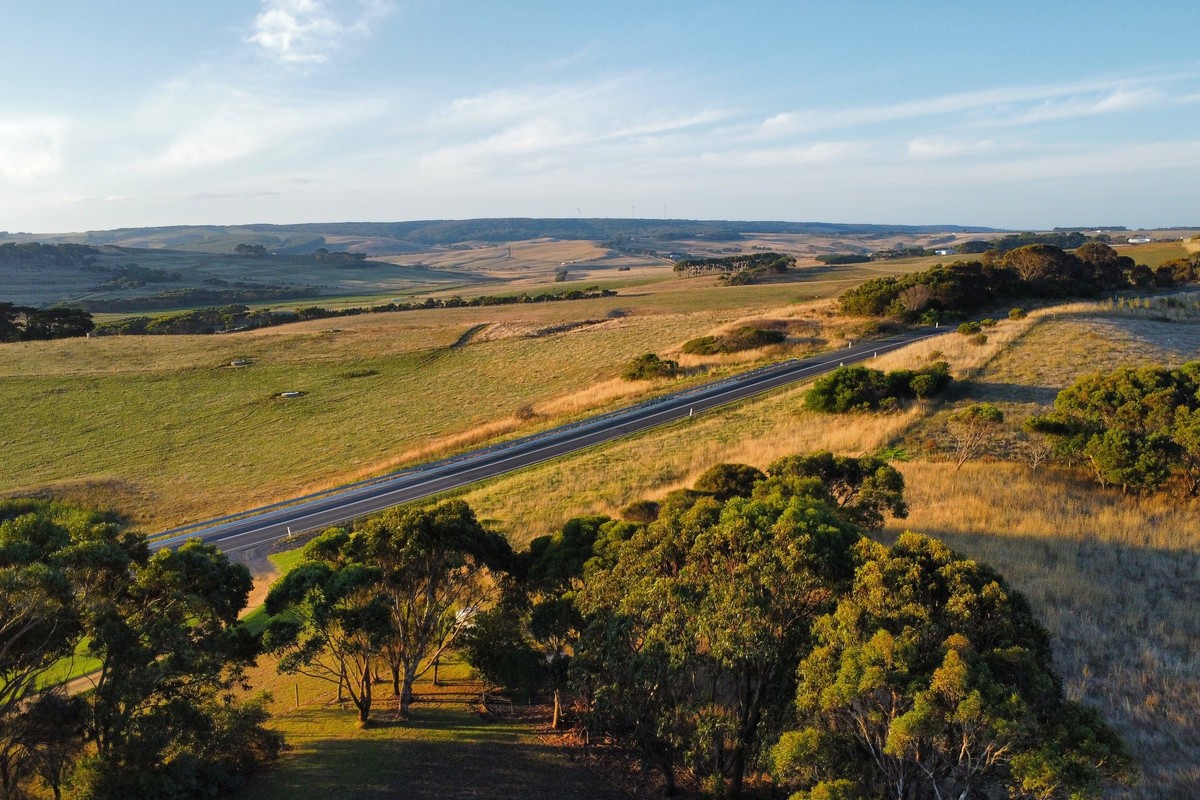
Photo: Photo by Federico P on Pexels (https://www.pexels.com/photo/scenic-view-of-anglesea-australia-countryside-30176158/)
In short: For South African families with two earners on two occupation lists, regional Australia is usually the strongest entry point: the Subclass 491 Skilled Work Regional visa adds 15 points with state nomination, where the metropolitan Subclass 189 adds none. Perth, Adelaide, Geelong and the Pilbara are the four anchor locations, and Perth is classified as a designated regional area under the current postcode instrument, which surprises most applicants. A dual-credential couple can lodge two parallel 491 EOIs, each using the other partner’s skills assessment for partner points, then take the first competitive invitation. The 491 converts to the Subclass 191 permanent visa after three years of regional living, qualifying work and meeting the indexed taxable income threshold.
Hendrik de Bruyn is at the kitchen table in Pretoria with two columns drawn on a sheet of paper. The first is the Subclass 189 Skilled Independent visa. His current points position for ANZSCO 233214 structural engineering does not clear it; recent invitation rounds have run materially above his score . The second is the Subclass 491 Skilled Work Regional provisional visa. The 15-point bonus for state nomination produces a competitive score in Western Australia, where structural engineering has been open for state nomination this cycle . The first column is closed. The second is open.
The second piece of information shifts the family arithmetic again. Marlie, his partner, is a SACE-registered primary school teacher with twelve years in the classroom and an AITSL skills assessment file open. Primary teaching appears on the WA Combined Skilled Occupation List in recent cycles . The de Bruyns are a dual-credential family with two separate 491 routes, not one. The question is no longer whether to leave Pretoria but which of four anchor locations in Australia the family decision points to: Perth, Adelaide, Geelong, or the Pilbara.
For an SA family with two earners on two occupation lists, regional Australia is the strongest door. The metropolitan Subclass 189 queue is not where this pathway runs.
Question one: why is Perth the SA gravity well?
Perth holds a fact that surprises SA applicants more than any other: it is classified as a designated regional area for Subclass 491 purposes under the current Department of Home Affairs postcode instrument . The same instrument also classifies Adelaide, Hobart, Canberra, Geelong, Newcastle and Wollongong as regional. Sydney, Melbourne and Brisbane metropolitan are excluded.
This matters more for SA families than for any other nationality variant because Perth is the SA gravity well. The established South African expat community in Perth is the largest in Australia, with Afrikaans and English-medium church communities, schools with SA-heavy cohorts, cricket clubs and the practical infrastructure that creates a genuine landing pad effect in week three rather than month three.
For an ECSA-registered structural engineer, WA carries a second weight: the resources sector. The Pilbara DAMA and the Goldfields DAMA extend occupation concessions to approved regional employers that the standard 491 list does not always cover, and structural and mining engineering codes have appeared under those agreements in recent cycles . The DAMA route is parallel to the state-nominated 491 route; for an SA structural engineer with a Pilbara employer-sponsored visa offer, it can produce a faster outcome than the EOI queue.
Question two: how does a dual-occupation family actually lodge?
This is the question most online research does not answer cleanly. When both partners hold positive skills assessments on occupations open for state nomination, the family is not limited to a single EOI with one partner as the secondary applicant.
The standard framing puts one partner as the primary applicant, with the partner’s positive skills assessment adding partner points to the primary applicant’s score . That structure works cleanly for a single-credential family.
For a dual-credential family, the practical option is parallel EOIs. Hendrik can lodge a 491 EOI with himself as primary applicant and Marlie’s AITSL assessment producing partner points. Marlie can separately lodge a 491 EOI with herself as primary applicant and Hendrik’s Engineers Australia assessment producing partner points. Both EOIs sit in SkillSelect concurrently. The family takes the first invitation that lands at a competitive score, on whichever occupation produces the result .
The strategic effect is insurance. If structural engineering closes mid-cycle in WA, Marlie’s primary-teaching EOI is already in the queue. If primary teaching saturates its allocation, Hendrik’s structural engineering EOI is the live route. The dual-credential family carries two parallel pathways, not one. The interaction between the two EOIs, the partner-points claims, and the WA nomination criteria needs a current read by a MARA-registered agent before the second EOI is lodged.
Question three: how does the 491 become permanent?
The 491 is provisional. The endpoint is the Subclass 191 Permanent Residence (Regional) visa, and the conversion mechanics are the most important set of facts in a five-year SA family plan.
Three structural requirements bind. The applicant must have lived in a designated regional area for at least three years while holding the 491 . The applicant must have worked in a designated regional area for the same period, with the work qualifying under the 191 instrument . The applicant must have met the taxable income threshold for each of those three years, with the threshold set by legislative instrument and indexed . We do not quote the figure; the threshold updates and a current consultation produces it at planning time.
For a dual-earner family on parallel EOIs, only one partner needs to be the primary applicant on the 491 grant. The 491 includes the partner and children as secondary applicants, and the 191 conversion follows the primary applicant’s three-year regional clock. Both earners working in regional WA helps the income threshold comfortably; only the primary applicant’s work history is the binding test for the 191.
Question four: school-year sequencing from December to late January
The SA school year ends in early December. The Australian school year starts in late January or early February following the summer holidays . For a family with primary-school-age children, that window is one of the harder constraints in the plan.
The clean scenario is an SA exit in December with the children placed in their new Australian school for the start of the new academic year. That requires the 491 grant by mid-November at the latest, the SAPS Police Clearance Certificate and DIRCO apostille on each document set in hand earlier, household goods shipped or in transit, and the rental secured before arrival. The window is achievable but does not survive a late visa-grant or a primary-residence sale that runs into January.
The fallback is a gap-year holding pattern: the children complete a partial term in SA, the family arrives in February or March, and the children enter the new Australian school mid-year. This is workable for younger children and less ideal for a child entering high school. For Jana at eleven, the high-school transition is a serious sequencing input.
Marlie’s AITSL conversion timing is the other school-side constraint. The assessment needs to be in hand before her EOI is lodged, and the AITSL English-language evidence threshold is generally higher than the Department of Home Affairs Competent floor .
Question five: SA community across the four anchor centres
Perth is the largest SA community in Australia, anchored in the northern suburbs and the Joondalup corridor, with established church communities, schools carrying significant SA-heritage cohorts, and supporter clubs that hold the cricket and rugby calendar together for the family that came up watching it.
Adelaide is the second-largest SA community among the eastern-state alternatives, with a denser concentration than Geelong or Hobart and a lower cost of living than Perth or Sydney. For an SA family weighing the alternative to Perth, Adelaide is the most natural landing point.
Geelong’s SA community is smaller but professional, anchored in engineering and education. Hobart’s is the smallest of the four; the Tasmanian nomination programme over the past decade has produced a current cohort meaningfully larger than it was in 2015.
The Pilbara is its own category. For an ECSA-registered structural engineer with a DAMA-sponsored offer, it is a working-life choice (intense rotations, resources-sector pace, fly-in-fly-out where the employer structures it that way), not a family-life choice in the same sense. Most SA Pilbara workers keep the family base in Perth or Geraldton and commute the rotation.
What to do next
Two notes before the closing sequence. The first is the Perth postcode question. We have read transcripts from SA applicants told by an AI tool, in confident chatbot prose, that Perth was a state capital and therefore metropolitan for migration. That is not what the current instrument says. The training data did not include the current designated regional area postcode schedule. A licensed agent reading the current legislative instrument confirms the classification in five minutes; an AI working from stale training data cannot.
The second is the SA-side document clock. The SAPS Police Clearance Certificate and the DIRCO apostille add weeks to the timeline, and every adult in the family needs a set . Start that clock alongside the skills assessment rather than after the visa is granted.
The two next steps are sequenced. The eligibility check at /eligibility/ gives you a current read on which states have your occupation open this cycle, whether the DAMA layer changes the picture, and whether your partner’s occupation produces a parallel EOI route. The consultation at /book-a-consultation-call/ converts that read into a regional-area shortlist matched to your family, an AITSL or Engineers Australia recognition pathway plan, and a document and departure sequence that aligns with the visa-grant timeline rather than running after it. For an SA dual-earner family, both steps are worth completing before money is committed to a skills assessment, a nomination application, or a flight.
Sources
- Subclass 491 Skilled Work Regional: immi.homeaffairs.gov.au
- Subclass 191 Permanent Residence (Skilled Regional): immi.homeaffairs.gov.au
- Subclass 494 Skilled Employer Sponsored Regional: immi.homeaffairs.gov.au
- Skilled occupation lists: immi.homeaffairs.gov.au