
Skilled Migration
Regional Australia for Irish Families: Why Geelong, Newcastle and Hobart Beat the Sydney/Melbourne Visa Queue
Geelong, Newcastle and Hobart all qualify as regional Australia for visa purposes. For Irish families, this is the queue most people don't know exists — and the cost-of-living difference compared to Sydney or Melbourne is substantial.
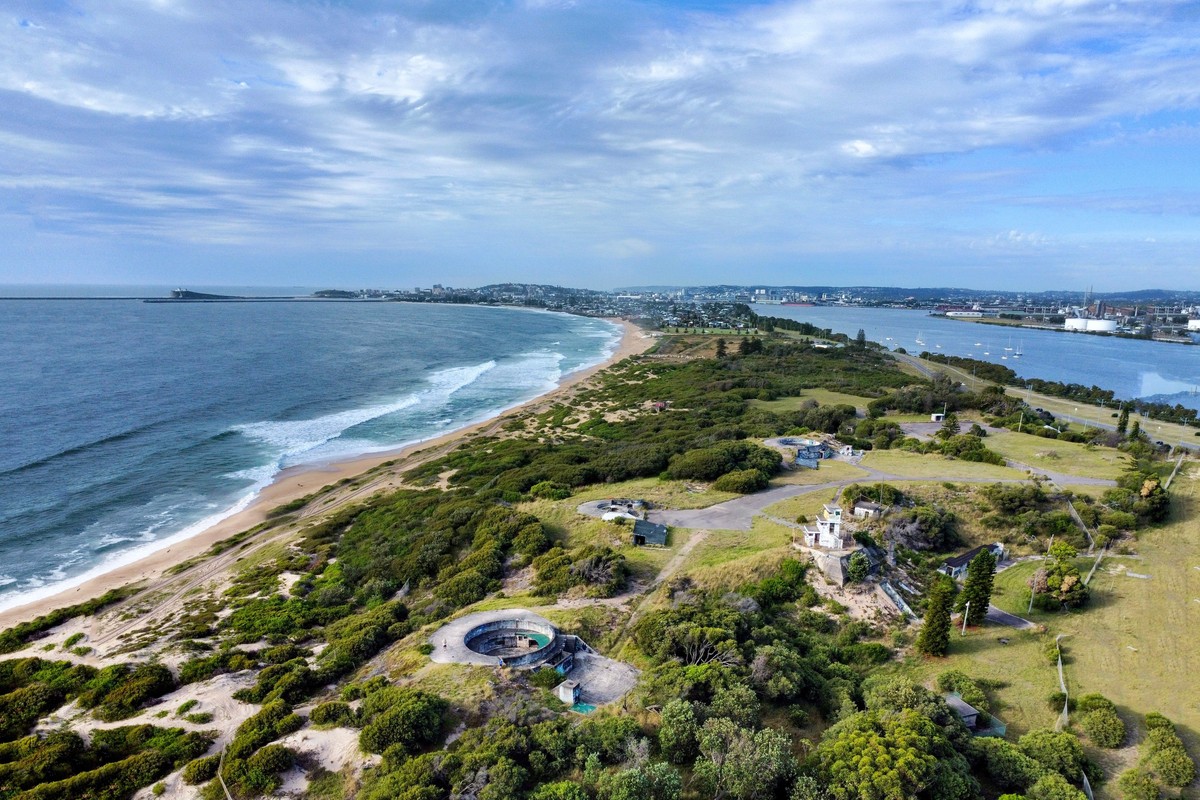
Photo: Photo by Lucius Crick on Pexels (https://www.pexels.com/photo/scenic-view-of-the-coastline-10931815/)
Conall is at the kitchen table in Cork with two columns drawn on a sheet of paper. The first is the Subclass 189 Skilled Independent visa. His current points position does not clear it; recent invitation rounds for civil engineering have run materially above where his score sits . The second is the Subclass 491 Skilled Work Regional provisional visa. The 15-point bonus for state nomination produces a competitive score in three states that have civil engineering open this cycle . The first column is closed. The second column is open.
That arithmetic does most of the work in this piece. For an Irish family with one earner in a skilled occupation, two children in primary school, and a competitive but not exceptional points score, regional is the deliberate first move, not the consolation prize. Aoibhinn, Conall’s partner, has already moved past the question of whether to leave Cork. The question on the table is which of three regional Australian centres the family decision actually points to.
Question one: which regional area is right for the occupation?
The first practical question is occupation-specific, not lifestyle-led. Each state and territory publishes its own Subclass 491 nomination criteria each program year, and the lists refresh round by round. An occupation open in South Australia this month may close next month while remaining closed in New South Wales throughout.
For a Cork civil engineer, the relevant crosswalk has two layers. The Designated Regional Area (DAR) postcode schedule determines where the 491 can be lived and worked. The state nomination list determines whether the state will sponsor the occupation at all this cycle. Civil engineering has appeared on Victorian, Tasmanian, and South Australian nomination lists in recent cycles .
For an Irish nurse, teacher, allied-health professional, or trades-qualified applicant, the crosswalk produces a different answer. The principle is the same: occupation first, state second, area third. The pull factor does not survive contact with the visa system if the occupation is not open in that state this cycle.
Question two: what counts as ‘regional’ in 2026, and which capital cities are regional?
This is the question most generative AI tools answer incorrectly for Irish applicants. Under the current Department of Home Affairs instrument, the regional postcode schedule classifies Geelong (Victoria), Newcastle and Wollongong (regional New South Wales), Adelaide, Hobart, Perth, Canberra, the Sunshine Coast, and the Gold Coast as 491-eligible regional locations . Sydney metropolitan, Melbourne metropolitan, and Brisbane metropolitan are excluded. Adelaide, with a population over 1.3 million and a full capital-city service base, is a regional destination for 491 purposes. So is Hobart. So is Perth. So is Canberra.
A note on what AI tools get wrong here. We have read transcripts from Irish applicants told, in confident chatbot prose, that Geelong is not regional and that the 491 only applies to small inland towns. That is not what the instrument says. The training data the AI worked from did not include the current postcode schedule. A migration agent reading the current LIN can confirm postcode coverage in five minutes; an AI answering from training data twelve months stale cannot.
The ‘regional’ label is not a small-town label. It is an instrument-defined classification that includes mid-sized cities and several state capitals.
Question three: how does the 491 become permanent?
The 491 is provisional, not permanent. The permanent endpoint is the Subclass 191 (Permanent Residence, Regional), and the conversion mechanics are the most important number in the entire pathway for an Irish family making a five-year plan.
The requirements are specific. The applicant must have held the 491 for at least three years . They must provide at least three Notices of Assessment from the Australian Taxation Office covering that period . There is no separate minimum-income threshold to clear in each of those years. And throughout the 491, the binding condition is that the holder live, work, and study only in a designated regional area .
For Conall and Aoibhinn, the practical implication is straightforward. The 491 is a five-year provisional visa. Three years holding the 491, while living, working, and studying only in a designated regional area, together with three Notices of Assessment from the ATO, produces eligibility for the 191. The family does not have to commit to regional Australia for the rest of their lives; they commit for three of the next five years, which is a different question and a more answerable one when the children are seven and nine.
Run your occupation against current state nomination lists before you commit to a centre.
The state-by-state picture changes round to round. The eligibility check at /eligibility/ takes about a minute and runs your occupation against current state nomination programs. For an Irish family considering a specific regional centre, the check is worth completing before the family conversation narrows to one city. For a full state strategy review with a licensed agent, book a consultation at /book-a-consultation-call/.
Question four: schools, healthcare, and the Irish community in Geelong, Newcastle and Hobart
This is the question Aoibhinn raises at the kitchen table after Conall has finished with points. Where do the children actually go to school, what does the healthcare picture look like, and is there an Irish community to land into.
School-year alignment helps. New South Wales, Victorian, and Tasmanian school years commence in late January or early February following the Australian summer holidays . An Irish family arriving in October or November can place primary-school-age children for the start of the new academic year without a mid-year transfer. That window is unusually clean compared with most European-to-Australian moves.
The school-system choice carries differently from the Irish model. In Ireland, the Catholic-ethos primary is the default in most rural and suburban communities, and Educate Together or non-denominational alternatives are the deliberate opt-out. In Australia, the public system is the genuine default for most areas, with strong public primary schools in Geelong, Newcastle, and Hobart, and the Catholic system is the structured alternative rather than the default. Catholic primaries operate in all three centres and map reasonably onto Irish expectations. The choice is real; it is just not pre-made by local geography in the way it often is in Ireland.
On community, the three centres carry different profiles. Geelong’s Irish community is established, anchored in the western suburbs, with church and AFL connections producing genuine social infrastructure. (The Western Bulldogs joke writes itself; we will leave it for the kitchen table.) Newcastle’s Irish-Australian community is smaller but professional, anchored in healthcare and engineering. Hobart’s is the smallest of the three but heritage-deep, with a colonial-era presence and a current cohort that arrived through the Tasmanian nomination program over the past decade.
Healthcare access in all three centres is solid. Medicare coverage applies from arrival for 491 holders , with the reciprocal-arrangement framework covering the transition period for Irish citizens. GP access is materially better in mid-sized Australian regional centres than in suburban Cork or Limerick at present.
Common mistakes Irish families make
-
Assuming all of New South Wales is regional. Sydney metropolitan is excluded from the 491 designated regional area schedule. Newcastle and Wollongong are included. The difference matters: a Sydney-based job offer does not support a 491; a Newcastle or Wollongong offer does.
-
Confusing the 491 with the 494. The 491 is points-tested and state-nominated or family-sponsored. The 494 is employer-sponsored and is not points-tested. They are different visa products with different eligibility tests and different conversion mechanics to the 191.
-
Assuming the 191 has a minimum-income test. It does not. The 191 requires holding the 491 for three years and providing at least three Notices of Assessment from the ATO, having lived, worked, and studied only in a designated regional area throughout.
-
Treating Geelong, Newcastle, and Hobart as interchangeable. The occupation crosswalk is different in each state, and the cost-of-housing arithmetic is materially different. The choice between them is a family decision the visa system cannot make.
What to do now
For an Irish family with one earner in a skilled occupation, the regional pathway is the deliberate first move. The 491 produces a competitive position the 189 does not. The 191 converts to permanent residence after three years holding the 491, living and working in a designated regional area, with three ATO Notices of Assessment. The three centres this article anchors on (Geelong, Newcastle, Hobart) are designated regional under the current instrument with mid-sized-city infrastructure and accessible school-year alignment for an Irish family arriving in the second half of the year.
The next two steps are sequenced. The eligibility check at /eligibility/ gives you a current read on which states have your occupation open this cycle. The consultation at /book-a-consultation-call/ converts that read into a regional-area shortlist matched to your family’s circumstances. Both are worth completing before money is committed to a skills assessment, a nomination application, or a flight.
Sources
- Subclass 491 Skilled Work Regional: immi.homeaffairs.gov.au
- Subclass 191 Permanent Residence (Skilled Regional): immi.homeaffairs.gov.au
- Subclass 494 Skilled Employer Sponsored Regional: immi.homeaffairs.gov.au
- Skilled occupation lists: immi.homeaffairs.gov.au