
Retirement
Wintering in South Africa for more than three months: which status fits a life with two homes
German, Austrian and Swiss passport holders may stay in South Africa for up to 90 days without applying for a visa in advance, not enough for a European winter. Two statuses allow regular longer stays: the temporary Retired Person Visa and permanent residence. Both can be applied for from home, and the second carries a condition in the Act that sits awkwardly with a life in Europe.
Migration rules change regularly. Treat this article as a policy snapshot and confirm current requirements with a licensed advisor before relying on it.
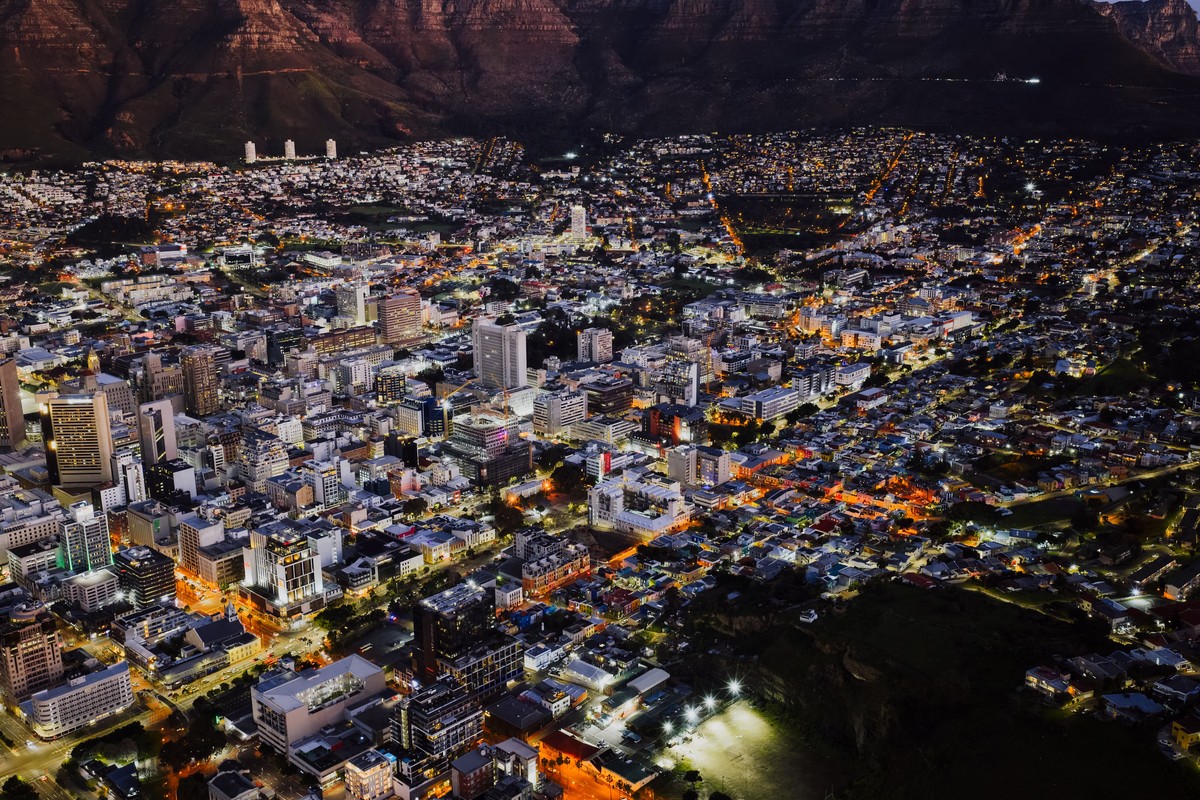
Photo: Photo by K on Pexels (https://www.pexels.com/photo/aerial-view-of-cape-town-at-night-with-table-mountain-33622083/)
German, Austrian and Swiss passport holders may stay in South Africa for up to 90 days without applying for a visa in advance. That does not cover a European winter: November to March is five months, and an extension is a discretionary decision, not an entitlement. If you want to winter in South Africa every year and stay longer than three months, you need a different status in the long run.
Two statuses fit: the temporary Retired Person Visa, which can expressly allow a seasonal stay, and South African permanent residence. Both can be applied for from home. The first needs your income proven again every few years. The second has no end date, but it carries a condition that sits awkwardly with a life in Germany, Austria or Switzerland, and the Act does not explain it further. That condition is the core of this article.
How long can you stay in South Africa? The 90 days and their extension
The Department of Home Affairs, South Africa’s immigration authority, lists Germany, Austria and Switzerland among the visa-exempt countries with 90 days for ordinary passports. You enter without applying for a visa in advance and may stay for up to 90 days.
A longer stay needs an application. In law you receive a visitor’s visa on arrival, and the Director-General, the head of the Department of Home Affairs, may extend it once by up to three further months. The application is made in person, at least 60 days before expiry, which for a 90-day stay means within the first 30 days after you arrive. As a rule you may not work as a visitor. If you stay longer than permitted, you can be declared undesirable: for twelve months, or for five years if you overstay by more than 30 days.
For a single long stay that works. A plan meant to last ten or fifteen winters would depend on the same discretionary decision every year.
The long-stay visa for winterers: the Retired Person Visa
Search for a long-stay visa for South Africa and the first thing you find is the temporary Retired Person Visa. It suits wintering better than its name suggests: under section 20(3)(a) of the Immigration Act it may allow its holder to stay on a seasonal or continuous basis. It is issued for up to four years and can then be renewed, each time on the same requirements as the first application.
It tests a minimum monthly income, currently ZAR 37,000; the amount is set by Government Gazette and we check it before every application. Pensions and annuities count, and so does capital or rental income. Each person must reach the amount on their own income; couples cannot add theirs together. A partner who falls short applies for an accompanying spouse visa instead.
This visa too requires, under section 20(1), an intention to retire in South Africa; whether a seasonal stay with a life centred in Europe fits that, we settle before you apply. Two further limits come with it. Work is not permitted unless the Director-General authorises it in an individual case. And it does not lead to permanent residence by itself: that is always a separate application on its own grounds. Our comparison of the Retired Person Visa and the Financially Independent Permit sets out how the two differ.
Permanent residence in South Africa: three routes, and what each one tests
Permanent residence spares you the renewals. It also gives you the rights and obligations of a citizen, other than those a law or the Constitution reserves for citizens, so you may work, consult or run a business. Three routes fit this readership, and Home Affairs tests something different on each: your net worth, your pension or your relationship.
Section 27(f): financial independence
The Financially Independent Permit requires, besides the general requirements such as good character, two things: a prescribed minimum net worth, currently ZAR 12 million, and a one-off payment to the Director-General, currently ZAR 120,000, which falls due once the application is approved. Both amounts are set by Government Gazette and can change; we check them before every application. No employer, sponsor or points test is involved. Our article on the Financially Independent Permit explains how the net worth is calculated and evidenced.
Section 27(e): retiring in South Africa
Section 27(e) is for people who intend to retire in South Africa. It requires the right to a lifelong pension, an irrevocable annuity or a retirement account that secures a prescribed minimum monthly payment; the Act also accepts a prescribed minimum net worth as an alternative. We run this route on pension income and handle net-worth cases under section 27(f). For a two-home plan, section 27(e) raises the same question as the Retired Person Visa: the Act ties it to an intention to retire in South Africa. How that sits with a life centred in Europe has to be settled before you apply.
Section 26(b): after five years together
If you have been married to, or in a permanent relationship with, a South African citizen or permanent resident for five years, section 26(b) is also open to you, provided Home Affairs is satisfied the relationship is genuine. If the relationship ends within two years of the permit being issued, the permit lapses, except where it ends by death.
Applying from Germany, Austria or Switzerland
You do not need to be in South Africa to apply. The application for permanent residence is lodged in person at the South African mission in your country of usual residence, and applying from home needs no South African visa first. Inside South Africa it is different: there the regulation requires a valid temporary visa. For section 27(f) we require a long-term visa in practice, such as the Retired Person Visa; a visitor’s stay is not enough. That visa must stay valid until the decision.
Under section 27(f), in our experience, processing can take one to three years. During that time you go on living at home and travel to South Africa as a visitor. The pending application gives you no right to stay: it extends no visit, and the 90 days apply until the permit is granted.
For section 27(f), the evidence matters as much as the amount. Home Affairs expects a statement of net worth built on certified documents; a bank statement on its own is refused, and both the format and the valuation of assets and liabilities have to be right. A radiological report and a medical report, on the other hand, are no longer required: Immigration Directive No. 05 of 2023 waives the radiological report and Ministerial Immigration Directive No. 10 of 2026 the medical report, even though some of Home Affairs’ own web pages still list both.
What a checklist cannot do
Before you spend money on certifications and valuations, we check whether the Retired Person Visa or permanent residence fits your plan, and if the latter, which of the three routes. We assemble the income or net-worth evidence the way Home Affairs assesses it, and set the order so that no document expires before submission. At a South African mission in Europe we prepare the application and guide you through each step; you attend the appointment yourself. If you later apply inside South Africa, we accompany you in person at the VFS centres in Cape Town, Pretoria and Johannesburg.
Book a consultation or take the eligibility check first; it takes about two minutes.
The condition a life with two homes depends on
Permanent residence has no end date, but it can be withdrawn. Section 28 of the Immigration Act sets out the grounds on which the Director-General may withdraw it, and two of them concern anyone who lives most of the year in Europe.
Taking up residence in the first year
The permit can be withdrawn if you have not taken up residence in South Africa within one year of its issue. This is the section 28 concept, not your registered address at home, and the Act does not say what it requires in detail. This is where plan and provision rub: a life with two homes is meant to keep its centre in Europe, and the provision expects residence in South Africa.
Do not count on sorting it out after the fact. How you will live and stay in South Africa in the first year after the permit is issued needs to be settled before it is issued, and ideally before you apply. Your tax adviser will later look at the same facts.
Three years’ absence
The permit can also be withdrawn if you have been out of South Africa for more than three years. The Act adds a decisive clause: the period of absence may only be interrupted by an admission and stay in South Africa. Regular winters in South Africa therefore interrupt it every year. Time abroad living with a spouse who is a South African citizen is not counted.
The risk arises when you cannot travel for years, through illness or caring for a relative, for example. The Director-General may extend the period in specific cases, but only on an application made beforehand and on good cause shown. The Act requires the application beforehand; act only after the three years have run, and you cannot rely on that extension.
Both provisions give Home Affairs discretion: the Act says the permit may be withdrawn, not that it lapses. Nobody planning ten winters should rely on that.
Tax and health cover: the questions alongside the application
A life with two homes is a life in two tax systems. If you spend several months in South Africa every year, you can become tax resident there while remaining tax resident at home. The question then is which country taxes your worldwide income and how a double taxation agreement removes the double charge, by credit or by exemption. The permit decides none of this: it is a right to stay, not a tax status. Have it checked by a tax adviser who knows both countries, using the same facts you settle for residence under section 28.
The same goes for health cover. Check whether and how your cover applies to stays abroad of several months before you fly, not after you fall ill.
Where the plan can fail
- Before the application, if the status does not fit the plan: permanent residence with ZAR 12 million in net worth where the Retired Person Visa would have done, or section 27(f) where the pension is enough for section 27(e).
- During processing, if the pending application is treated as a right to stay and a winter runs past the 90 days.
- In the first year after issue, if residence in South Africa is not taken up.
- In years without travel, if the three years run out before an extension was applied for.
- At each Retired Person Visa renewal, if income no longer reaches the amount then in force.
Frequently asked questions
How long can a German, Austrian or Swiss citizen stay in South Africa?
Up to 90 days on an ordinary passport, without applying for a visa in advance. A single extension of up to three months is possible; it is at Home Affairs’ discretion and must be applied for in person at least 60 days before expiry.
Is there a long-stay visa for South Africa that lets me come every winter?
Yes. The Retired Person Visa may allow a seasonal stay if you intend to retire in South Africa, and it is issued for up to four years, with renewal. It requires a minimum monthly income, currently ZAR 37,000 per person. As a rule it does not allow you to work.
Do I have to move to South Africa to get permanent residence?
Not to apply: you lodge the application at the South African mission in your country of usual residence and need no South African visa first. Once it is granted, however, the Director-General may withdraw it if you have not taken up residence in South Africa within one year. The Act does not define what that requires; we settle it with you before you apply.
Will I lose the permit if I live mostly in Europe?
Not automatically. The Director-General may withdraw it if you have not taken up residence in South Africa within one year of issue or have been absent for more than three years. Every entry and stay in South Africa interrupts the absence; what counts as taking up residence we settle with you before you apply.
May I work in South Africa with permanent residence?
Yes. Permanent residence gives you the rights of a citizen, other than those a law or the Constitution reserves for citizens. You may therefore work as an employee, consult or run a business, whether you hold it under section 27(e), 27(f) or 26(b). With the temporary Retired Person Visa, by contrast, work is not permitted as a rule.
Can I apply in Austria or Switzerland?
Yes. An application from abroad goes to the South African mission in your country of usual residence, to the mission in a country whose passport you hold, or to a mission the Director-General has designated for a neighbouring country. Which office that is for you, and how the appointment works, we settle with you before submission.
Conclusion
Ninety visa-free days cover a holiday, not a plan for many winters. For regularly spending more than three months a year there are two statuses to consider: the Retired Person Visa, which can allow seasonal stays and must be evidenced again every few years, and permanent residence, which you apply for from Germany, Austria or Switzerland. Which route applies to you, income, net worth, pension or relationship, decides the application. Whether you keep permanent residence while living in two places depends above all on two provisions: taking up residence in the first year, and no absence of more than three years. Plan the first before the permit is issued. We plan it with you in a consultation, before you start gathering documents.