
Family Migration
The second stage: from Subclass 820 to 801, and the citizenship-by-marriage myth
The permanent stage of a partner visa is not automatic, and marrying an Australian does not make you Australian. What the Department reassesses at the second stage and how citizenship actually works.
Migration rules change regularly. Treat this article as a policy snapshot and confirm current requirements with a licensed advisor before relying on it.
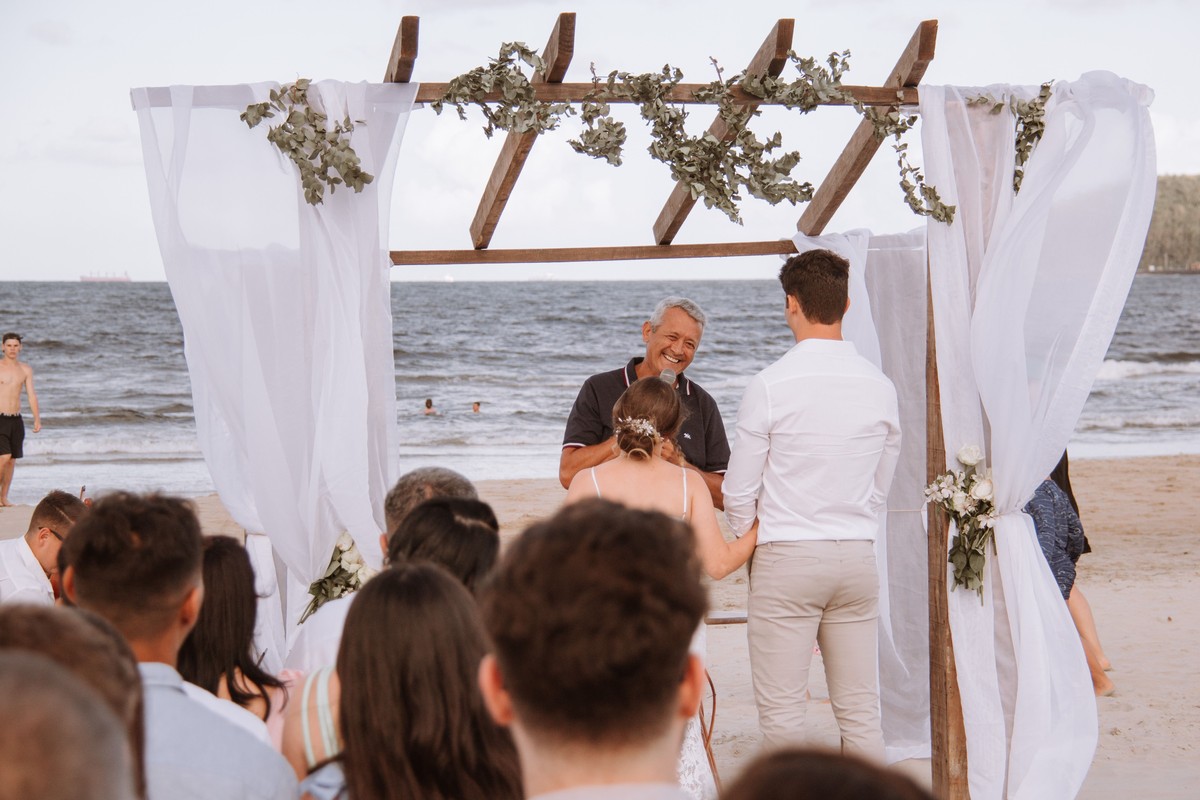
Photo: Photo by ADINE MACENO on Pexels (https://www.pexels.com/photo/wedding-celebration-on-the-beach-14888499/)
In short: The permanent stage of an Australian partner visa, the Subclass 801 onshore or the Subclass 100 offshore, is assessed roughly two years after you lodged, on evidence covering the period since. It is a genuine reassessment, not a rubber stamp, though no further application charge falls due because you paid one combined charge at the start. Separately, and this catches a lot of people: there is no such thing as Australian citizenship by marriage. Marrying an Australian does not make you Australian and does not shorten the route. You reach citizenship the way everyone else does, by holding permanent residence and then satisfying the general residence requirement in the Australian Citizenship Act 2007.
The provisional grant is the midpoint, not the end
When the Subclass 820 or 309 is granted, many couples quietly file the whole thing away as finished. It is not finished. It is half done.
Roughly two years after you lodged, the Department assesses the permanent stage of your partner visa, the Subclass 801 onshore or the Subclass 100 offshore, using updated relationship evidence. Your relationship is looked at again, as it stands at that later date.
The good news is financial: no further application charge arises. The combined charge you paid at lodgement covers both stages, which is one of the more sensible features of the partner visa system.
The less comfortable news is that the second stage is a real assessment. It can be refused.
What the Department reassesses
At the permanent stage the question is whether the relationship is still genuine and continuing.
That is tested on evidence covering the intervening period, not on the bundle you assembled two years earlier. The categories are familiar because they are the same ones as at the first stage: shared financial arrangements, the nature of your household, social evidence that you are recognised as a couple, and the commitment you have to each other.
The single most common weakness we see is not dishonesty. It is couples who assembled a strong first-stage bundle, relaxed, and then had to reconstruct two years of evidence from memory when the Department asked. Joint accounts, a shared lease, correspondence addressed to both of you at the same address, dated photographs, travel taken together: gather these as you go and the second stage is straightforward.
You must also have kept the Department informed. Changes of address and any periods of separation need to be notified. Undisclosed gaps that emerge at the second stage read far worse than disclosed ones.
Keeping the provisional visa alive
One recognised failure mode deserves naming: letting the Subclass 820 expire before the 801 has been assessed.
The provisional visa is a live status with conditions, and it has to be maintained through the two years. Bridging visa rules continue to matter if they apply to you, particularly around travel. If you are on a bridging visa and need to leave Australia, sort out the Bridging B before you book.
If the relationship ends
Occasionally it does, and the reflex assumption is that the visa is simply lost. That is not automatically correct in every case. Australian migration law contains provisions covering, among other situations, family violence.
This is genuinely not a matter to work out from an article, in either direction. If your relationship ends during the provisional period, take advice immediately rather than assuming you have no position, or assuming you are fine.
There is no Australian citizenship by marriage
Now the second half, and the misconception that brings a lot of people to this topic.
Australian law has no marriage-based route to citizenship. There is no shortened qualifying period for the spouse of an Australian, no automatic entitlement, and no separate application stream. The phrase “citizenship by marriage” describes something that does not exist in the Australian system, however common it is in general conversation and however true it may be elsewhere.
A partner of an Australian reaches citizenship exactly as anyone else does: first permanent residence, then the general residence requirement.
Your partner visa is what gets you the permanent residence. It is a genuine advantage, because it is a route to permanent residence that involves no points test, no occupation list and no employer. But once you hold permanent residence, the citizenship rules that apply to you are the ordinary ones.
What the general residence requirement actually says
Section 22 of the Australian Citizenship Act 2007 sets out three limbs. All must be satisfied.
- You were present in Australia for the four years immediately before the day you apply.
- You were not present as an unlawful non-citizen at any time during that four-year period.
- You were present as a permanent resident for the twelve months immediately before the day you apply.
Two allowances for time abroad sit alongside them.
- Absences totalling not more than twelve months across the four-year period are disregarded.
- Absences totalling not more than ninety days during the final twelve months are disregarded, provided you were a permanent resident throughout each absence.
That ninety-day cap in the final year is the one that catches people. Twelve months of absence across four years feels generous, so applicants plan travel against that figure and overlook the much tighter limit that applies to the last twelve months.
What this means for a partner visa holder in practice
Here is the part that is genuinely encouraging, and it is the opposite of what the myth implies.
The four-year limb counts lawful presence, not permanent residence. Time you spent in Australia lawfully on the provisional Subclass 820, and on whatever substantive visa you held before it, can count toward those four years. Only the final twelve-month limb requires permanent-resident status.
So for an onshore couple, the citizenship clock has largely been running throughout the partner visa process. By the time the Subclass 801 is granted, a good deal of the four years is often already behind you, and what remains is the twelve months as a permanent resident.
That is why the honest answer to “does marrying an Australian speed up citizenship” is: not through any marriage rule, but yes in practice, because the partner visa gets you to permanent residence without a points test while your qualifying time accrues.
One last thing people get wrong at the finish. Citizenship is not conferred when your application is approved. It takes effect when you make the pledge of commitment at a citizenship ceremony.
Approaching the second stage, or wondering when you can apply for citizenship? Our eligibility check takes about a minute. For a considered view on your evidence or your qualifying dates, speak to one of our MARA-registered advisers.
Common mistakes
- Treating the provisional grant as the finish line. The permanent stage is a fresh assessment on new evidence.
- Stopping evidence collection after the first grant. The two years between stages are the evidence period for the next decision.
- Believing marriage shortens or replaces the citizenship route. It does neither.
- Overlooking the ninety-day absence cap in the final twelve months before a citizenship application.
- Not telling the Department about changes, including address changes and periods of separation.
Conclusion
There are two separate processes here, running back to back, and conflating them causes most of the confusion. The partner visa takes you to permanent residence in two stages, with the second stage a real assessment that rewards couples who kept their evidence current. Citizenship is then a separate matter, decided on the ordinary residence rules that apply to every permanent resident, with no marriage concession because none exists.
The practical consolation is that the clock has mostly been running while you waited. If you would like your qualifying dates worked out properly, or your second-stage evidence reviewed before it is assessed, our MARA-registered advisers can do that.
Sources
- Australian Citizenship Act 2007, section 22 General residence requirement
- Australian Citizenship Act 2007, section 21 Application and eligibility for citizenship
- Become a citizen: permanent residents, Department of Home Affairs
- Partner visa (apply in Australia) subclass 820 and 801, Department of Home Affairs
- Partner visa (apply overseas) subclass 309 and 100, Department of Home Affairs