
Country Guides
Migrating to South Africa: Visas, Pathways and Requirements
Which South African visa fits you? Critical Skills, general work, business, retirement and financial-independence routes, and the steps to migrate to South Africa.
Migration rules change regularly. Treat this article as a policy snapshot and confirm current requirements with a licensed advisor before relying on it.
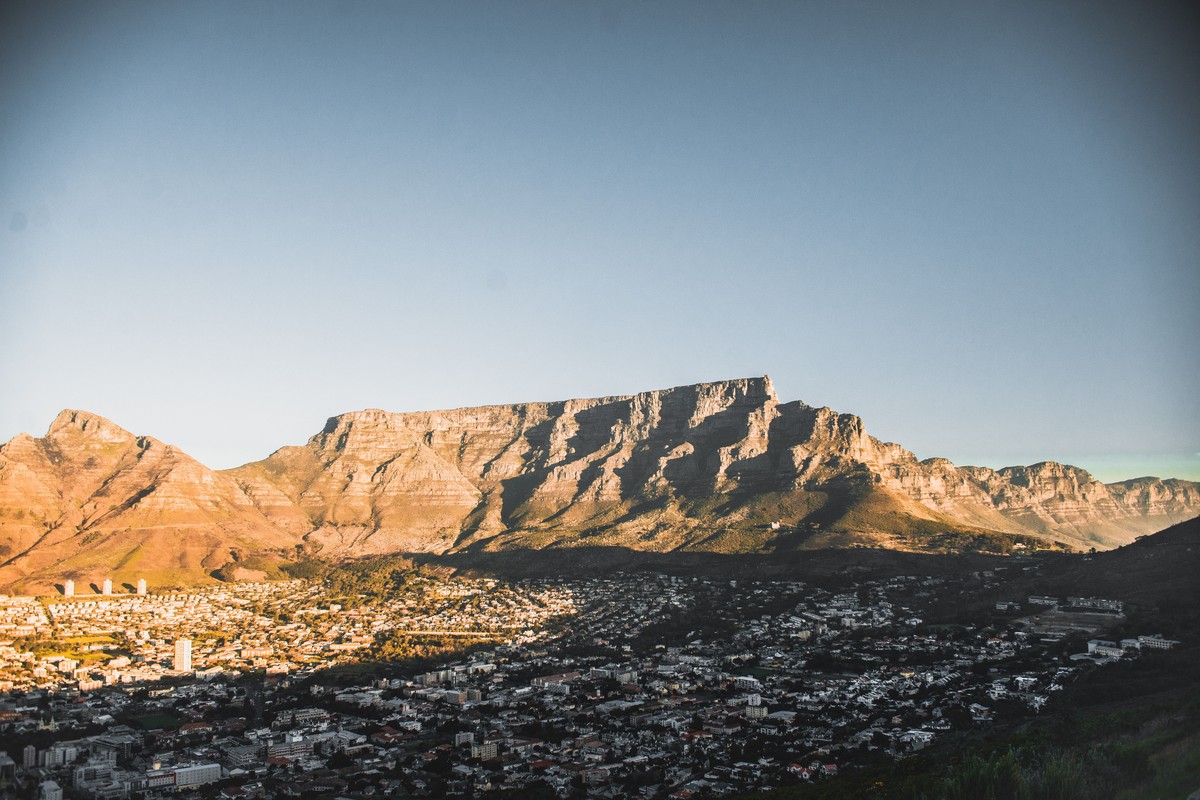
Photo: Photo by Jay jay Redelinghuys on Pexels (https://www.pexels.com/photo/town-surrounded-by-rocky-mountains-8470660/)
In short: South Africa has routes for skilled workers, business owners, retirees and the financially independent, and they run on different logic from Australia or New Zealand. Skilled migration centres on the Critical Skills Work Visa, for occupations on the official Critical Skills List, and the General Work Visa, a 100-point eligibility test for other job offers. Retirees qualify on monthly income; the financially independent on net worth. Almost every skilled case runs through one slow gate first: the SAQA evaluation of your qualifications. This guide shows which route suits which profile, and where cases come unstuck.
Why South Africa
South Africa draws a particular mix of migrants: skilled professionals in shortage fields, entrepreneurs setting up or buying a business, and retirees whose pension stretches much further under the Cape sun than it does at home. The climate, the space and the cost of living do the persuading. What decides whether a move is realistic, though, is how the system works.
Migration is run centrally by the Department of Home Affairs (DHA). One difference matters for planning from the outset: unlike Australia or New Zealand, South Africa has no statutory register of immigration advisers, no MARA or IAA equivalent. That makes choosing an experienced, accountable consultant a matter of judgement and track record rather than a licence check.
At Intergate, South African advice is led by Katja Haslinger, who emigrated from Germany to South Africa herself. Her advice pairs licensed German emigration consulting with lived experience of the country, the paperwork, and the practical decisions around settling there.
A note on expectations: a South African skilled case is a project measured in months, and the clock usually starts with the SAQA evaluation of your qualification, which can take three to six months on its own. Understanding that the SAQA step gates almost everything else lets you start it early and avoid the idle waiting that drags a case out.
The main visa pathways to South Africa
South Africa runs many visa categories. For most people migrating with a profession, a business, or a retirement plan, five matter most.
Critical Skills Work Visa
The Critical Skills Work Visa is for applicants whose occupation appears on the current South African Critical Skills List and who hold a job offer from a South African employer. It is not a work-seeker visa: the offer is required. A SAQA evaluation and registration with the relevant professional body are mandatory, and the occupation must match the listed skill precisely, not approximately. An initial 12-month visa can be granted while SAQA and professional registration are still in progress; once both are finalised, a longer visa of up to five years is available, and a permanent residence application can follow. Since 18 October 2024, a listed occupation scores the full 100 points on its own under the points-based system, which routes the application to this visa.
General Work Visa
The General Work Visa applies when you have a job offer but your occupation is not on the Critical Skills List. Since 18 October 2024 it is decided on a 100-point eligibility test, not the old labour-market-testing model. You score points across qualifications (NQF Level 7 to 8 earns 30 points, NQF 9 to 10 earns 50), work experience (five to ten years earns 20, more than ten earns 30), the salary offered (roughly R650,800 to R976,200 a year earns 20, above that earns 50), an offer from a Trusted Employer (30), and proficiency in an official South African language (10). You need at least 100 points, and a profile that falls short cannot be repaired at adjudication. The test applies to you, the applicant; employer compliance with labour regulations is still reviewed separately.
Business Visa
The Business Visa is for those investing in and running a business in South Africa. The benchmark investment is R5 million in book value, though that amount can be reduced, on application to the Department of Trade, Industry and Competition (DTIC), for businesses in priority sectors. It is a reduction, not a waiver: the threshold is lowered through DTIC, not set aside by Home Affairs. A condition that catches people out is that at least 60 percent of staff must be South African citizens or permanent residents. The route suits genuine operators with a viable plan, not passive investors.
Retired Person Visa
The Retired Person Visa is not tied to age but to income. You show a qualifying monthly passive income, such as a pension, rental income or capital income, currently around R37,000 a month. It is a temporary residence visa, renewable, and it does not permit employment or business activity. Importantly, it does not convert to permanent residence automatically; permanent residence for retirees is a separate application under the retirement provisions of the Immigration Act. For many retirees the income test is more accessible than the net-worth route below.
Financially Independent Permanent Residence
The Financially Independent permit is a direct route to permanent residence under Section 27(f) of the Immigration Act. It turns on net worth: currently a prescribed minimum of R12 million in certified net assets, plus a one-off fee on the order of R120,000. There is no skills test and no job requirement, and once the permit is granted there is no restriction on working, consulting or running a business. Processing is among the slowest in the system, often one to three years. It suits those who can demonstrate substantial, well-documented assets and want residence in their own right rather than through work or family.
Which route suits which profile
The useful question is rarely “which visa is best”, but “which one fits my situation”.
Skilled professionals in shortage fields. If your occupation is on the Critical Skills List, for example in engineering, IT, health or the sciences, the Critical Skills Work Visa is usually the cleanest route, provided SAQA and the professional body confirm the exact skill. A listed occupation carries the full points on its own.
Skilled workers with an offer but no listed occupation. The General Work Visa is the route, and the 100-point test is the thing to model first. Qualifications, experience and salary together usually decide whether a profile clears 100.
Entrepreneurs and operators. The Business Visa fits those putting capital and themselves into a South African business, with the DTIC reduction worth exploring for priority sectors.
Retirees and the financially independent. Income points to the Retired Person Visa; substantial net worth points to the Financially Independent permanent residence route. Many people who could qualify either way weigh the renewable temporary visa against the slower but permanent net-worth route.
Requirements: SAQA, professional registration, income and net worth
A few building blocks decide most South African applications.
SAQA evaluation. For every skilled route, a South African Qualifications Authority evaluation of your foreign qualification is mandatory, and it is the main timeline driver. SAQA does not accept third-party submissions, so the applicant lodges it directly; an adviser guides the file but cannot submit it for you. Start it early.
Professional registration. The Critical Skills Work Visa also requires registration, or confirmed eligibility for registration, with the relevant South African professional body for your occupation. A missing registration letter is a common refusal.
Income or net worth. The Retired Person Visa turns on monthly passive income; the Financially Independent route on certified net worth. Both thresholds are set by Gazette and should be confirmed at the time you apply.
Medicals. Medical and radiological (chest X-ray) reports are no longer required.
The process: usually through SAQA first
A typical skilled case follows a clear order, and the order matters because the early steps gate the later ones.
- Strategy and category. Settle which visa fits, confirm whether your occupation is on the Critical Skills List, and, for a General Work Visa, model your 100 points before committing fees.
- SAQA evaluation. Lodge the foreign-qualification evaluation with SAQA. This is usually the longest single step.
- Professional body registration. For the Critical Skills route, register, or secure confirmation of eligibility, with the relevant body.
- Visa application. Lodge at a South African mission or VFS centre with the full file. Critical Skills cases at major missions are often decided within two to four months when complete.
Retirement and financial-independence cases skip the SAQA and professional-registration steps but turn instead on documented income or certified net worth.
Common mistakes
- Lodging a skilled application without a SAQA evaluation. It is a prerequisite, not a later step.
- Treating a near-match as a match on the Critical Skills List. A similar job title in a different category is treated as a different occupation, and only the exact listed skill qualifies.
- Relying on an outdated Critical Skills List. The list is revised periodically; an application citing a removed occupation is refused.
- Underestimating the General Work Visa’s 100-point test, then finding the profile falls short across qualifications, experience and salary with no way to fix it at adjudication.
- Assuming the Retired Person Visa converts to permanent residence on its own. It does not.
- Expecting the R5 million Business Visa investment to be waived. It can be reduced through DTIC for priority sectors, not set aside.
Why an experienced consultant matters
South Africa has no licensing scheme for immigration advisers, so the safeguard is not a register but a track record. The practical value lies in sequencing and in catching the avoidable: confirming Critical Skills List alignment before any fee is committed, getting the SAQA evaluation moving early because it gates everything, modelling the 100 points before a General Work Visa is lodged, and choosing between the retirement and financial-independence routes on the real thresholds. An adviser guides the SAQA and document-legalisation steps you must complete yourself, and prepares a business case with the DTIC requirements in mind. At Intergate we work to a transparent flat fee, quoted at the consultation, with no hidden items.
Frequently asked questions
Do I need a job offer to migrate to South Africa
For the work routes, yes. Both the Critical Skills Work Visa and the General Work Visa require an offer from a South African employer. The retirement and financially independent routes need no job; they turn on income and net worth.
What is the difference between the Critical Skills and General Work Visa
The Critical Skills Work Visa is for occupations on the official Critical Skills List, which now score the full 100 points on their own. The General Work Visa is for job offers in occupations not on the list, and must reach 100 points across qualifications, experience, salary, employer and language.
How long does it take
The SAQA evaluation alone often runs three to six months and usually sets the pace. A complete Critical Skills case is then often decided within two to four months at major missions. The Financially Independent permanent residence route is far slower, frequently one to three years.
Does my age matter
There is no general age cap on the work visas. The Retired Person Visa is defined by income rather than a minimum age, and does not permit work.
Can I get permanent residence
Yes, by more than one route: the Financially Independent permit is permanent residence in its own right, and Critical Skills, General Work Visa and retirement holders can apply for permanent residence under the relevant provisions of the Immigration Act once they qualify.
Your next step
The first step costs nothing and takes about a minute: the eligibility check. It shows which routes are realistic for your profile, whether that is Critical Skills, a General Work Visa, business, retirement or financial independence. After that, an experienced South Africa adviser guides you through SAQA, professional registration and the application, on a transparent flat fee quoted at the consultation. You can also see all the routes on our South Africa page.
South Africa rewards getting the order right. Start the qualification evaluation early, choose the route your profile actually supports, and the move follows from strength rather than hope.
Sources
The migration and visa details in this article rest on the official primary sources of the Department of Home Affairs and the points-based determination gazetted in 2024:
- Critical Skills Work Visa: dha.gov.za
- General Work Visa: dha.gov.za
- Points-based work-visa system (Government Gazette 51365 and 51366, 18 October 2024)
- Business Visa: dha.gov.za
- Retired Person Visa: dha.gov.za
- Permanent Residence, Financially Independent (Section 27(f)): dha.gov.za
- South African Qualifications Authority (SAQA): saqa.org.za
All migration and visa facts in this article rest on the official primary sources linked in the “Sources” section (DHA visa listings for Critical Skills, General Work, Business and Retired Person; the permanent-residence listing for Section 27(f); and SAQA). The General Work Visa 100-point model reflects the points-based system introduced on 18 October 2024 (GG 51365 / GG 51366, Immigration Directive No. 10 of 2024), which superseded the earlier labour-market-testing model; the KB record general-work predates this and was not used for the points framing. Please confirm against current DHA operational practice (SA reviewer: Katja Haslinger): (1) the current Critical Skills List gazette reference and any occupation changes; (2) the current Retired Person income threshold (~R37,000/month) and Financially Independent net-worth threshold (~R12 million) and fee (~R120,000), all Gazette-set; (3) the exact General Work Visa salary bands. No non-KB statistics used.