
Retirement
Why so many British retirees in their 60s feel stuck, and what they are doing about it
For some British retirees, the question is no longer whether life in the UK is manageable. It is whether the next ten years could feel lighter somewhere else.
Reviewed by Katja Haslinger
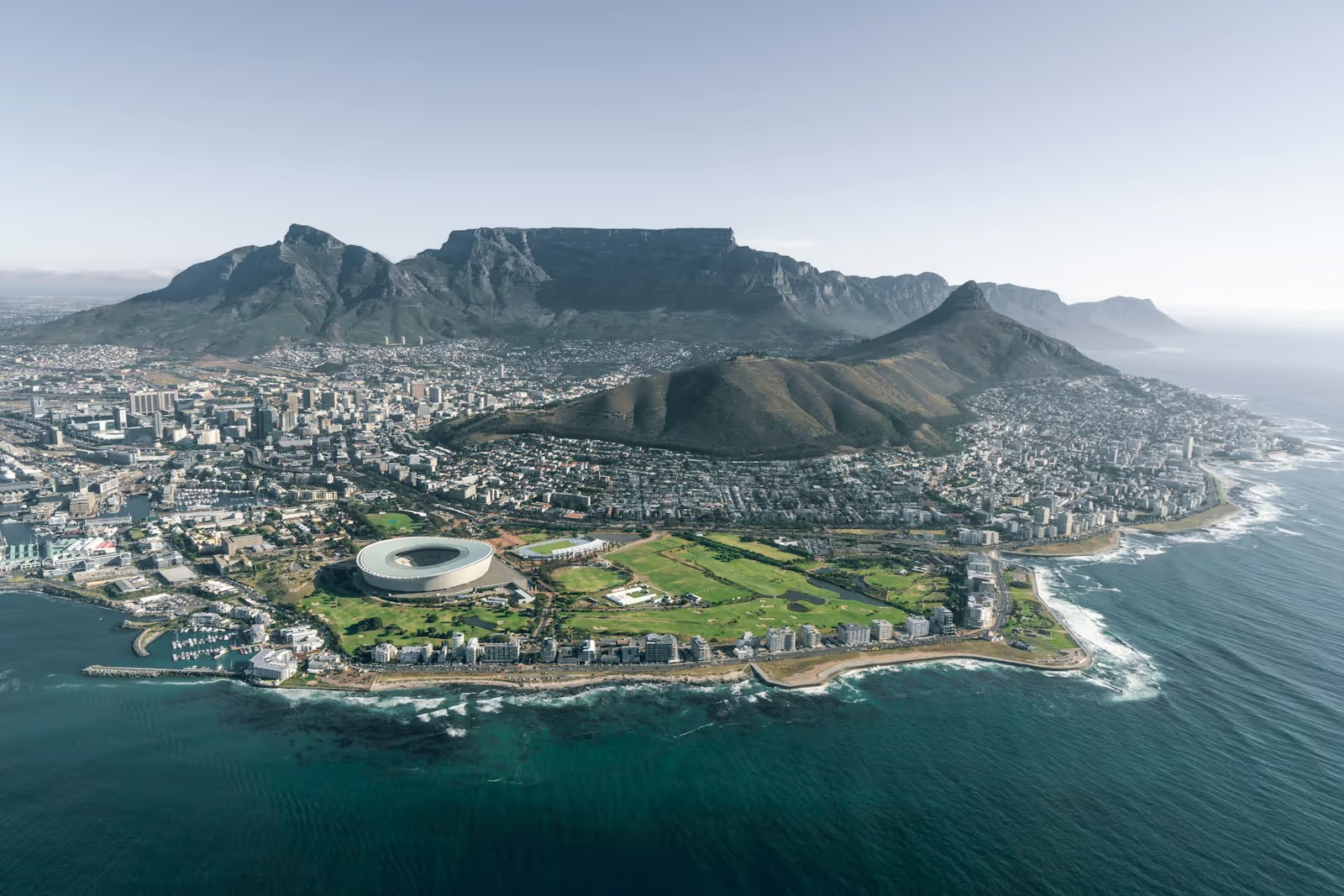
Photo: Intergate Emigration
There is a particular kind of conversation we hear from British retirees in their early sixties.
It does not usually begin with a visa category. It begins with repetition. Another winter. Another council tax bill. Another postponed NHS appointment. Another conversation about whether the pension stretches as far as it used to.
For some people, retirement in the UK still works. Family is close, the house is paid off, the NHS is familiar, and the routines are settled. For others, retirement begins to feel like groundhog day: the same weather, the same costs, the same shrinking sense of space.
That is when South Africa enters the conversation.
The issue is not only money
Money matters, but it is rarely the whole story.
British retirees who look seriously at South Africa are usually trying to solve a bundle of problems at once:
- They want more outdoor time.
- They want more space for the money they already have.
- They want private healthcare options they can understand and plan for.
- They want a social life that does not depend on waiting for summer.
- They want to feel that retirement still has movement in it.
South Africa can be attractive because it offers climate, property choice, private medical care, English-language daily life, and a familiar holiday history for many British families. Cape Town, the Winelands, the Garden Route, and parts of KwaZulu-Natal all appeal for different reasons.
But attraction is not the same as suitability.
What people are actually doing
Most serious retirees do not sell up immediately. They test the idea.
The first step is often a longer stay: two or three months in the area they think they know. A holiday shows the best version of a place. A longer stay shows the supermarket, the medical appointments, the winter weather, the traffic, the load shedding plan, the security habits, and whether the social life still feels good when the novelty fades.
The second step is usually financial modelling. Not fantasy modelling, but real monthly numbers: pension income, exchange-rate exposure, medical aid, rent or purchase costs, UK property income if retained, travel back to family, and emergency reserves.
The third step is immigration. South Africa has retirement and financially independent routes, but each has evidence requirements. Income, capital, medicals, police clearances, document legalisation, and timing all matter.
The emotional test
There is also an emotional test that people underestimate.
Ask yourself:
- Are you moving toward something, or only away from the UK?
- Would you still want South Africa if the exchange rate moved against you?
- Could you manage a health issue from there?
- How often do you need to see children or grandchildren in person?
- Would you rent first before buying?
If the honest answers are still positive, the idea may deserve proper assessment.
A better first question
The first question is not “Can I retire in South Africa?”
The better question is: “What would have to be true for South Africa to be a stable retirement option for me?”
That changes the conversation. It moves you from frustration to planning. It also stops you from treating a good holiday as a life decision.
For some British retirees, South Africa is not the answer. For others, it is the first time retirement feels open again.
The job is to find out which one applies before you commit your home, savings, and family rhythm to the move.